Residential
A Montana winter does not negotiate
When the feeder goes down and the temperature does too, a home without backup power loses heat, water, and its freezer inventory in that order. We size residential standby around the loads that protect the structure first, then add comfort.
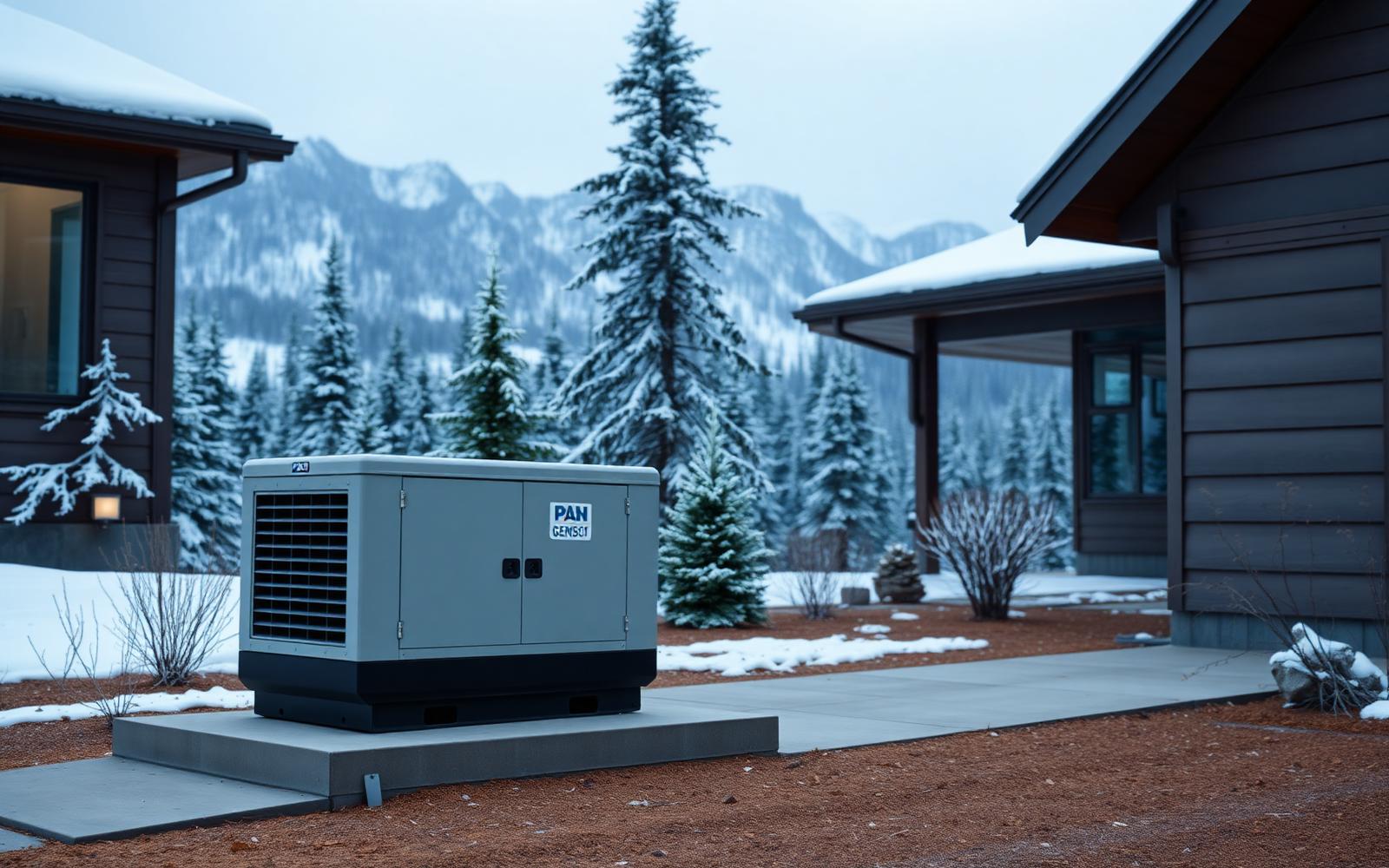
Load profile
What we size for in a Montana home
- Heating
- Furnace blower, boiler circulators, or heat pump, including the starting surge, which is several times running current.
- Water
- Well pump and pressure tank. On rural properties this is the load that determines the unit size more often than anything else.
- Food & refrigeration
- Refrigerator, chest freezers, and any game or beef inventory that represents real money.
- Septic & sump
- Lift pumps and sump pumps, which are the difference between an outage and a flooded basement.
- Life & safety
- Medical equipment, security, cellular repeaters, and enough lighting to move safely.
- Comfort loads
- Range, dryer, and HVAC cooling, backed up only when the budget and unit size support it.
Equipment class
Three common residential configurations
Nearly every Montana home lands in one of these. Fuel choice is usually decided by whether natural gas reaches the property.
8 – 14 kW
Essential circuits
Air-cooled standby feeding a managed sub-panel: heat, water, refrigeration, and lighting. The cost-efficient answer for most homes.
18 – 26 kW
Whole home
Air-cooled standby with load management, covering effectively the entire panel including one HVAC compressor.
30 – 60 kW
Large or rural estate
Liquid-cooled standby for deep wells, shops, outbuildings, and multi-zone heating on a single fuel source.
Process
From call to commissioned
Site visit
Written proposal
Install & permit
Handover & plan
Get a home standby quote
Tell us your well pump horsepower, heat source, and panel size. That is usually enough for an accurate first recommendation.